School readiness includes communication, self-care, relationships and learning habits as well as early literacy and mathematics. Both Montessori and other early-childhood programs can support these abilities. Compare the experiences children receive rather than assuming a program label guarantees readiness.
Everyday independence
Look for manageable opportunities to care for belongings, put materials away and participate in daily routines. Ask how teachers help when a child still needs support with a task.
Communication and relationships
Children need practice asking for help, listening, taking turns and recovering after a disagreement. Observe the language adults use and how they guide children through difficult moments.
Attention and persistence
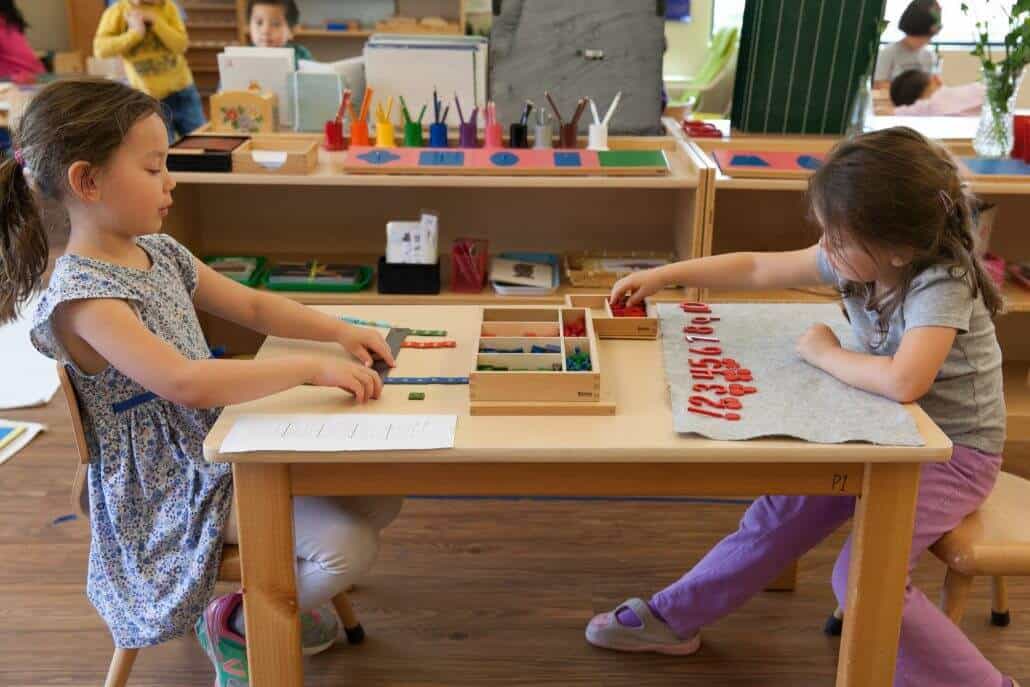
Montessori work periods give children time to repeat suitable activities and build concentration. Other programs may support persistence through play and projects. Ask how staff respond when a child loses interest or encounters a challenge.
Literacy and mathematics
Request examples of sound, language and counting activities. Ask how teachers observe understanding and choose the next step. Readiness develops at different rates; no classroom approach guarantees a particular future result.
Make your comparison practical
Discuss your child’s current strengths and needs with each school. Compare schedules, transition support and parent communication alongside curriculum. For the broader care decision, read Montessori School vs. Traditional Daycare. Our ten classroom examples and Private Kindergarten page offer useful next steps.
Visit MSSL to discuss your child’s next stage.