
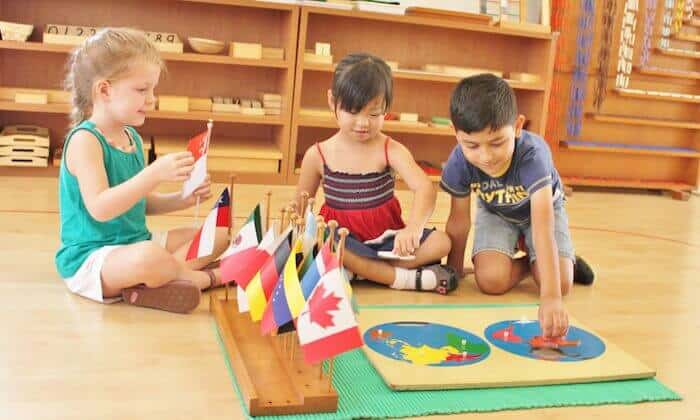
Montessori preschool gives children repeated opportunities to practice useful skills through purposeful activity. These ten examples explain what families can look for in a classroom; they are opportunities for development, not promises that every child will progress in the same way.
Ten advantages you can observe
- Accessible materials: low shelves allow children to choose familiar work and return it when finished.
- Practical independence: pouring a drink or fastening a frame gives a child a manageable task to complete.
- Concentration through repetition: a child can repeat a meaningful activity as coordination and understanding grow.
- Concrete mathematics: counting objects connects number names with quantities a child can handle.
- Language through conversation: naming objects, listening to stories and playing sound games support communication.
- Care of shared spaces: wiping a spill or returning a tray makes responsibility part of daily life.
- Choice with boundaries: children practice choosing appropriate work while respecting materials and classmates.
- Learning from others: mixed-age Primary communities offer opportunities to observe, help and collaborate.
- Feedback from materials: some materials help children notice a mismatch and try again without relying on an adult for every answer.
- Individual lessons: observation helps teachers decide when to introduce a new activity or revisit an earlier one.
Turn a benefits list into tour questions
Ask a teacher to demonstrate one activity, explain its purpose and describe how it changes as a child progresses. Notice whether children can reach materials, whether the room supports orderly movement and how adults help when a child becomes frustrated.
Read our guide to Montessori and school readiness for the broader developmental picture, or explore the MSSL Primary program and plan a campus visit.