
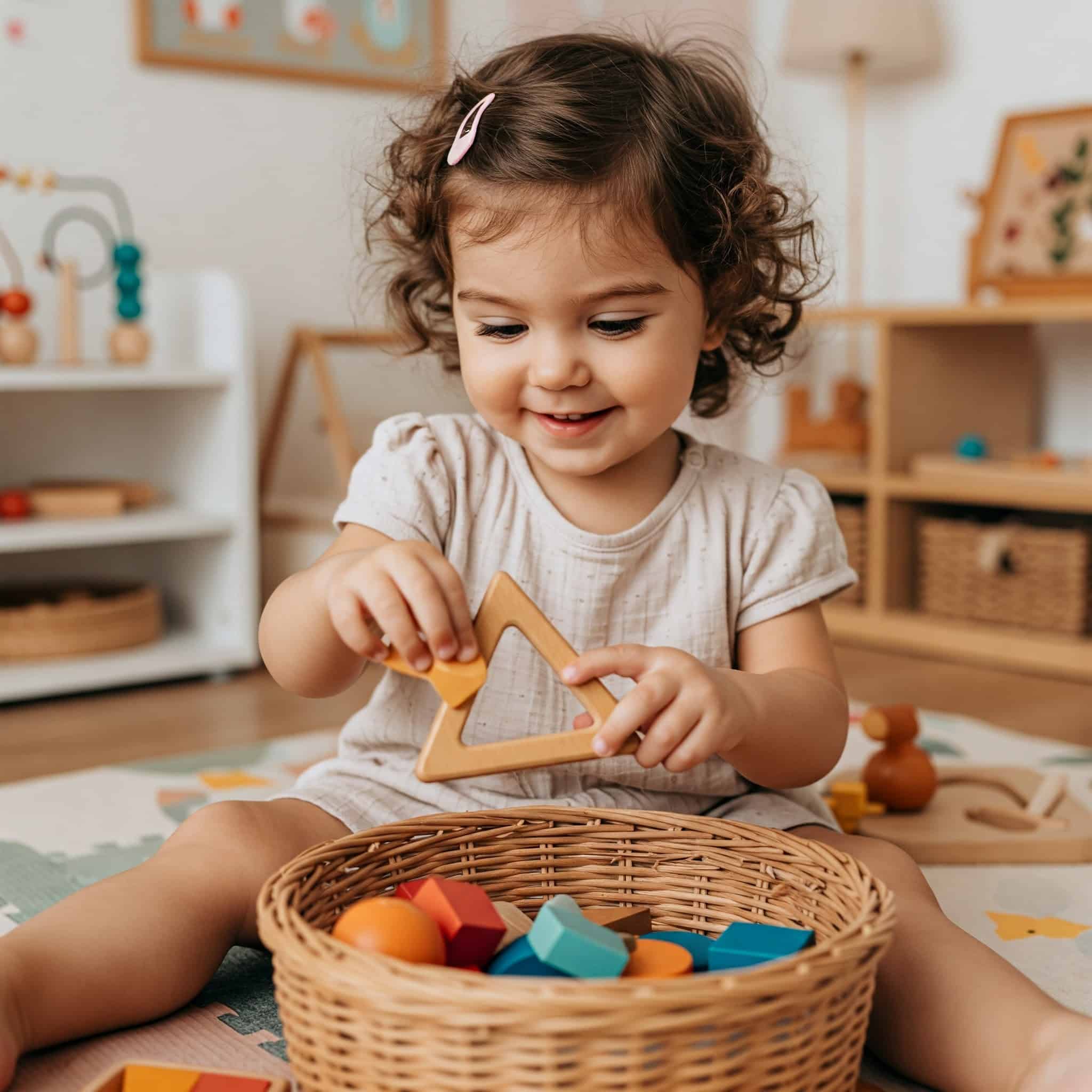
The Montessori Journey: From Infancy to Primary School – A Pathway to Holistic Development
A child’s needs change dramatically between infancy and the kindergarten years. Montessori education is designed to change with them.
An infant exploring movement and language, a toddler determined to do things independently, and a preschool child beginning to read, count and reason are at very different developmental stages. Yet each can benefit from an environment built around respect, hands-on learning, independence and individual progress.
For families comparing early-childhood education in Sugar Land, Missouri City and surrounding Fort Bend communities, the Montessori journey offers something distinctive: a developmental pathway that can begin in infancy and continue through the Montessori Primary and kindergarten years.
Families who want a broader introduction to the approach can begin with MSSL’s Montessori School in Sugar Land & Missouri City guide.
What Is the Montessori Journey?
The Montessori journey is not one curriculum repeated from infancy through age six.
Instead, the environment changes as the child develops.
The materials, expectations, daily routines and role of the teacher evolve, while several Montessori principles remain consistent:
- respect for the individual child
- hands-on learning
- growing independence
- freedom within appropriate limits
- carefully prepared environments
- observation-based teaching
- development according to readiness
- meaningful participation in a classroom community
This creates continuity without expecting children at different ages to learn in exactly the same way.
Stage 1: Montessori in Infancy
Infancy is a period of extraordinary physical, sensory, emotional and language development.
At this stage, Montessori is less about formal lessons and more about creating an environment that respects the infant’s developing abilities.
A thoughtfully prepared infant environment may support:
- safe freedom of movement
- responsive caregiving
- language-rich interaction
- sensory exploration
- predictable routines
- growing physical coordination
- secure relationships with caregivers
Movement Matters
Babies learn through their bodies.
Opportunities to stretch, reach, roll, crawl, grasp and eventually walk help children develop coordination while learning about their environment.
Rather than keeping infants passive for long periods, a well-designed environment gives them safe opportunities to move and explore according to their developmental stage.
Language Begins Long Before Speech
Infants absorb language through everyday interaction.
Adults can support this development through conversation, songs, stories and clear descriptions of what is happening during routines.
Families looking for Montessori-based infant care can learn more about the MSSL Infant Program.
Stage 2: The Montessori Toddler Years
The toddler years bring a powerful developmental shift.
Children increasingly want to participate in everyday life for themselves.
They want to carry, pour, sweep, dress, wash, open, close and imitate the purposeful actions they see adults perform.
That desire for independence is central to the Montessori toddler environment.
Practical Life Becomes Important
Practical Life activities may include:
- pouring water
- transferring objects
- washing hands
- wiping spills
- helping with simple food preparation
- carrying classroom materials
- participating in dressing and self-care
These tasks may look simple, but they can support coordination, concentration, sequencing and confidence.
Language Expands Rapidly
Toddlers are also developing communication quickly.
A language-rich environment gives children opportunities to hear precise vocabulary, name real objects, listen to stories and communicate needs with adults and peers.
Social Development Begins to Broaden
Toddlers do not need to share perfectly or play cooperatively for long periods.
They are still learning how to be part of a group.
A consistent classroom community gives them opportunities to observe other children, participate in parallel play and gradually learn simple social routines.
Parents considering this stage can explore the MSSL Toddler Program.
Stage 3: Preschool and Montessori Primary
The preschool years bring major changes in language, reasoning, imagination, coordination, concentration and social understanding.
This is also the stage many families are comparing when searching for preschool or Pre-K options in Sugar Land and Missouri City.
A Montessori Primary environment can support children through increasingly sophisticated work while preserving the hands-on, child-centered approach established earlier.
Families comparing preschool options can explore MSSL’s Preschool & Pre-K in Sugar Land and Missouri City guide.
The Five Major Areas of Montessori Primary
Practical Life
Practical Life continues, but the work becomes more complex.
Children may practice longer sequences involving care of self, care of the classroom, food preparation and grace and courtesy.
These activities can strengthen:
- concentration
- coordination
- organization
- independence
- responsibility
Sensorial Learning
Sensorial materials help children refine how they observe and classify the world.
Children may compare qualities such as:
- size
- shape
- color
- dimension
- sound
- texture
- weight
These experiences can help prepare the mind for increasingly complex language and mathematics.
Language
Language work may progress from vocabulary and sound awareness toward:
- letter-sound relationships
- writing preparation
- word building
- phonetic reading
- reading comprehension
- increasingly sophisticated spoken language
Mathematics
Montessori mathematics begins with concrete materials that allow children to experience quantity and numerical relationships physically.
Children can gradually progress toward:
- counting
- numerals
- quantity
- place value
- number relationships
- early operations
- increasingly abstract mathematical thinking
Culture, Science and the Wider World
Children may also explore:
- geography
- nature
- science
- art
- music
- plants and animals
- cultural traditions
These areas give children opportunities to connect classroom learning with the wider world.
Why Montessori Uses Multi-Age Classrooms
One distinctive feature of Montessori Primary is the multi-age classroom.
A younger preschool child and an older child approaching kindergarten may share the same broader classroom community while working at different levels.
This allows younger children to observe more experienced classmates.
Older children may gain opportunities to model routines, demonstrate responsibility and contribute to the classroom community.
Importantly, multi-age does not mean infants, toddlers and Primary children are all placed together. Each developmental stage requires its own appropriately prepared environment.
Where Does Pre-K Fit Into the Montessori Journey?
Traditional schools often separate preschool and Pre-K into distinct classrooms.
Montessori Primary may span both stages within a broader developmental cycle.
A younger preschool child may be building foundational skills while an older child preparing for kindergarten works with more advanced language, mathematics and cultural materials.
The environment remains familiar while the child’s level of work changes considerably.
Stage 4: Kindergarten as the Culminating Primary Year
For children who continue through the Montessori Primary cycle, kindergarten can become a particularly important stage.
The child may already understand classroom routines, know how to choose and complete work, and have experience with many of the materials used throughout Primary.
This familiarity can allow older children to apply earlier learning to increasingly complex work.
Kindergarten-age children may continue developing:
- reading
- writing
- mathematics
- problem-solving
- independence
- organization
- responsibility
- leadership within the classroom community
Families approaching this stage can explore MSSL’s Private Kindergarten in Sugar Land and Missouri City guide.
Why Continuity Can Matter in Early Childhood
Every school transition introduces new adults, routines, expectations and environments.
For some families, continuity within one educational philosophy is valuable because the child can continue building on familiar approaches to learning rather than beginning completely over at every stage.
Continuity can include familiarity with:
- classroom expectations
- independent work
- hands-on materials
- Practical Life routines
- respectful communication
- the relationship between choice and responsibility
The work itself becomes more advanced, but the underlying approach remains recognizable.
Montessori and Whole-Child Development
The phrase “holistic development” is often used broadly.
In Montessori, it can be understood more concretely as attention to multiple areas of development occurring together.
A single activity may involve several skills at once.
For example, pouring water can involve:
- fine-motor coordination
- concentration
- sequencing
- independence
- care of the environment
A language lesson may involve vocabulary, attention, memory and social interaction.
Learning is not separated completely from movement, relationships and everyday life.
How Montessori Supports Growing Independence
Independence is not something children suddenly acquire when they begin kindergarten.
It develops through repeated opportunities over time.
The progression might look like:
- Infant: increasing freedom of movement
- Toddler: “I can do it” Practical Life tasks
- Preschool: choosing and completing classroom work
- Older Primary: managing increasingly complex sequences and responsibilities
The adult continues providing guidance while gradually allowing the child to take greater ownership.
How Montessori Supports Concentration
Young children often develop concentration by becoming deeply involved in meaningful activity.
Montessori classrooms typically protect periods of time in which children can choose appropriate work, receive lessons and repeat activities.
Rather than interrupting a child simply because a fixed amount of time has passed, teachers can allow productive concentration to continue when appropriate.
Over time, children may become capable of sustaining attention for increasingly complex work.
How Montessori Supports Social Development
Montessori is sometimes misunderstood as an entirely individual form of education.
Children do work independently, but they also learn how to function within a community.
They practice:
- waiting for materials
- respecting another child’s workspace
- using appropriate language
- solving small conflicts
- participating in group experiences
- caring for shared spaces
These experiences allow social skills to develop through everyday classroom life.
Does a Child Need to Start Montessori as an Infant?
No.
Children can enter Montessori programs at different ages and still benefit from the approach.
Starting earlier may provide additional continuity, but families should not assume that a child who did not begin in infancy has “missed” Montessori.
A thoughtful school should help new children become familiar with classroom routines and expectations at the stage they enter.
What Should Parents Look for in a Montessori School?
Because the word “Montessori” is widely used, families should look beyond the name when comparing programs.
During a tour, observe:
- how teachers interact with children
- whether materials are orderly and accessible
- whether furniture and tools fit the children’s developmental stage
- whether children have meaningful choices
- how independence is encouraged
- whether children have time to concentrate
- how adults respond when children need help
- how the curriculum changes from toddler to Primary
- how older Primary children prepare for kindergarten
Questions to Ask During a Montessori School Tour
- Which classroom is appropriate for my child’s age?
- How does the environment change as children grow?
- How are new lessons introduced?
- How does the school support independence?
- How are language and mathematics taught?
- How long is the uninterrupted work period?
- How are social conflicts handled?
- How does Primary progress toward kindergarten?
- How does the school communicate progress with families?
- What are the current hours and enrollment options?
The Montessori Journey at MSSL
Montessori School of Sugar Land serves families through two Fort Bend County campuses.
Sugar Land Campus
4502 Austin Parkway
Sugar Land, TX 77479
Sienna Campus
8900 Sienna Ranch Road
Missouri City, TX 77459
MSSL offers programs spanning several stages of early-childhood development, allowing families to explore Montessori options from infancy through the Primary and kindergarten years.
Continue the Montessori Journey
1. Montessori School — start here
Montessori School in Sugar Land & Missouri City →
2. Infant Program
Explore the MSSL Infant Program →
3. Toddler Program
Explore the MSSL Toddler Program →
4. Preschool & Pre-K
Preschool & Pre-K in Sugar Land & Missouri City →
5. Private Kindergarten
Private Kindergarten in Sugar Land & Missouri City →
A Developmental Pathway That Grows With the Child
The Montessori journey is not about keeping a child’s education the same from infancy through kindergarten.
It is about providing a consistent developmental philosophy while the environment, materials and expectations evolve.
The infant explores movement and relationships. The toddler develops independence. The preschool child begins organizing language, mathematics and the wider world. The older Primary child can apply those foundations to increasingly complex learning and responsibility.
For families comparing Montessori schools, preschool and early-childhood programs in Sugar Land or Missouri City, seeing each stage in person can make the progression much easier to understand.
Visit MSSL
Tour MSSL’s Sugar Land or Sienna campus to see how Montessori environments support children at different stages of development and discuss which program is appropriate for your child.