How to Prepare Your Child for Preschool: A Parent’s Complete Guide
Starting preschool is an exciting milestone for young children—and often an emotional one for parents. The good news is that preschool readiness is not about making sure your child can already read, write, count or sit perfectly still before the first day.
Preparing for preschool is really about helping your child become more comfortable with routines, communication, independence, relationships and new experiences.
For families comparing preschool in Sugar Land, Missouri City and nearby Fort Bend communities, the goal is not to “train” a child for school. It is to help your child enter the classroom feeling secure, capable and curious.
What Does Preschool Readiness Really Mean?
Preschool readiness describes a child’s growing ability to participate in a classroom community.
It includes:
- physical development
- communication
- social interaction
- emotional regulation
- independence
- attention and concentration
- curiosity
- practical self-care skills
Recognizing colors, numbers, shapes or letters can be helpful, but children do not need to master those skills before starting preschool.
A child who is beginning to communicate needs, participate in routines, explore new materials and attempt simple tasks independently is already building important preschool-readiness skills.
Families can explore MSSL’s
Preschool & Pre-K in Sugar Land and Missouri City guide for more information about local preschool options.
1. Encourage Everyday Independence
One of the most valuable ways to prepare a child for preschool is to let them participate in everyday life.
Young children gain confidence when adults give them time to try manageable tasks instead of automatically doing everything for them.
At home, invite your child to practice:
- putting on simple clothing
- putting on shoes or a jacket
- carrying a backpack
- washing and drying hands
- using child-sized utensils
- pouring water from a small pitcher
- returning toys and books to their places
- wiping up small spills
- helping set or clear the table
These tasks may take longer when children do them independently.
That extra time is part of the learning process.
Children build confidence through effort, repetition and the experience of completing meaningful tasks for themselves.
2. Build a Predictable Daily Routine
Young children often feel more secure when the rhythm of the day is familiar.
A predictable routine helps children know what comes next, which can make the transition to a preschool schedule easier.
Before school begins, try creating relatively consistent times for:
- waking up
- getting dressed
- breakfast
- leaving the house
- outdoor play
- meals
- quiet reading or rest
- bedtime
The routine does not need to be rigid.
The goal is simply to make common transitions familiar.
Practice the Morning Routine
A few practice mornings can help before the first day.
Your child can practice waking up, getting dressed, eating breakfast, putting on shoes and carrying a small backpack.
You can also drive by the school or visit the campus before the first full day so the location begins to feel familiar.
3. Help Your Child Communicate Basic Needs
Children do not need a large vocabulary to begin preschool.
They do benefit from learning simple ways to communicate needs, preferences and emotions.
Helpful phrases may include:
- “I need help.”
- “May I have a turn?”
- “I need to use the bathroom.”
- “I feel sad.”
- “I am still using this.”
- “I do not like that.”
A child may not remember these phrases every time.
What matters is gradually learning that communication can help solve problems.
Read Together Every Day
Reading aloud supports vocabulary, listening, comprehension, imagination and early literacy.
Keep reading relaxed and conversational.
You might occasionally ask:
- What do you think will happen next?
- How do you think this character feels?
- What do you notice in this picture?
- What would you do?
There is no need to turn reading into a quiz.
The goal is to help children associate language and books with connection and curiosity.
4. Practice Social Skills Through Everyday Experiences
A preschool classroom is a community.
Children gradually learn how to:
- share space
- wait briefly
- take turns
- communicate with peers
- participate in group experiences
- solve small social problems
Playgrounds, library story times, family gatherings, playdates and community activities give children natural opportunities to practice being around others.
Parents can model language such as:
- “You can ask if you may join.”
- “She is using that right now. You can wait or choose something else.”
- “Tell him how that made you feel.”
- “Let’s think of a solution.”
Children do not need to enter preschool already knowing how to handle every conflict.
Those social skills continue developing inside the classroom.
5. Help Your Child Understand Big Feelings
Starting preschool can bring excitement, nervousness, curiosity and sadness—sometimes all at once.
Children benefit when adults acknowledge those emotions rather than dismissing them.
Instead of saying:
“There is nothing to be scared of.”
You might say:
“It is okay to feel nervous about something new. Your teachers will take care of you, and I will come back after school.”
Naming an emotion can make it easier for a child to understand.
Create a Simple Goodbye Routine
A predictable goodbye can help reduce separation anxiety.
Keep it warm, calm and brief.
For example:
- one hug
- one reassuring phrase
- a reminder that you will return
- a confident handoff to the teacher
Long or uncertain goodbyes can sometimes make the transition harder because the child senses the adult’s hesitation.
6. Strengthen Fine-Motor Skills
Preschool children use their hands throughout the day.
Fine-motor activities strengthen the small muscles used for practical tasks, classroom materials and eventually writing.
Try activities such as:
- drawing with crayons or chalk
- play dough or clay
- puzzles
- stringing large beads
- stickers
- tongs or clothespins
- child-safe scissors
- blocks and construction materials
7. Build Gross-Motor Confidence
Young children also need opportunities to move their whole bodies.
Running, climbing, balancing and jumping support coordination, confidence and physical development.
Useful activities include:
- running
- jumping
- climbing
- throwing and catching a soft ball
- dancing
- walking along a balance line
- exploring playgrounds
- nature walks
- simple obstacle courses
Movement should remain enjoyable rather than becoming another performance test.
8. Encourage Curiosity Instead of Memorization
Preparing for preschool does not require stacks of worksheets or flashcards.
Young children learn through movement, conversation, repetition, sensory exploration and hands-on experience.
When your child asks a question, try responding with:
“What do you think?”
or:
“How could we find out?”
These simple questions encourage observation, reasoning and confidence.
Everyday activities such as cooking, gardening, sorting household objects, observing insects or discussing the weather can become meaningful learning experiences.
9. Speak Positively and Realistically About Preschool
Children often notice how adults feel about major changes.
Talk about preschool in a warm and realistic way.
You might mention:
- meeting teachers
- discovering classroom materials
- making friends
- reading books
- creating art
- spending time outdoors
- learning new things
- doing more things independently
Avoid using teachers or school as a threat.
For example, statements such as
“Your teacher will not let you do that” can make school sound like a punishment before the child has even arrived.
How Montessori Preschool Supports Readiness
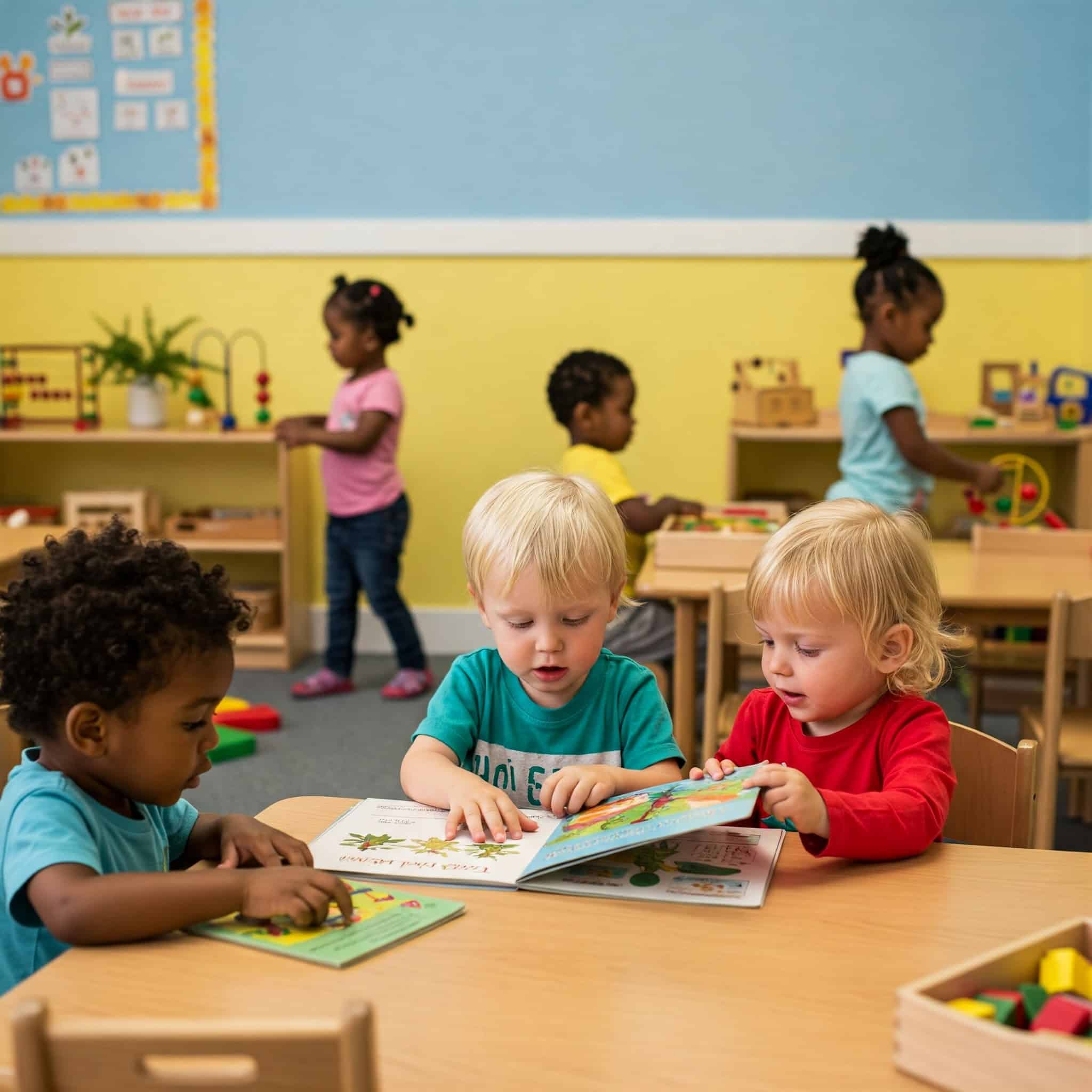
A Montessori preschool environment is designed to give children daily opportunities to practice independence, concentration, communication, coordination and care of the environment.
Materials are organized so children can see their choices and return activities when finished.
Furniture and practical tools are scaled for children so they can participate without unnecessary adult assistance.
Within a Montessori preschool classroom, children may learn to:
- choose purposeful work
- complete hands-on activities
- care for classroom materials
- participate in Practical Life routines
- concentrate for increasing periods
- move confidently through the classroom
- communicate respectfully
- progress according to individual readiness
Rather than requiring every child to complete exactly the same activity at the same time, Montessori teachers observe development and introduce lessons according to readiness.
Families who want to understand this approach in greater depth can explore MSSL’s
Montessori School in Sugar Land and Missouri City guide.
Simple Preschool Readiness Activities to Try at Home
Many of the best preschool-preparation activities are already part of everyday family life.
Prepare a Snack
Invite your child to wash fruit, spread a soft food, pour water from a small pitcher, carry a plate and help clean the workspace.
Sort Laundry
Match socks or sort clothing by owner, type, color or size.
Care for Plants
Let your child water plants, remove dry leaves and observe new growth.
Visit the Library
Allow your child to choose books, practice using a quiet voice and help care for borrowed materials.
Take a Nature Walk
Notice plants, insects, textures, sounds and weather.
Follow your child’s questions rather than turning the walk into a formal lesson.
Create Open-Ended Art
Offer crayons, washable paint, paper, clay or collage materials without requiring a specific finished result.
The creative process is often more valuable than producing a perfect project.
Common Preschool Preparation Mistakes to Avoid
Parents naturally want their children to succeed, but too much pressure can make the transition more difficult.
Try to avoid:
- comparing your child with siblings or classmates
- expecting perfect behavior
- expecting complete independence
- focusing only on letters and numbers
- using excessive worksheets
- answering every question before your child has time to think
- doing tasks your child can attempt independently
- overscheduling the weeks before school begins
- showing excessive worry about separation
Confidence develops through patient practice.
What Age Should a Child Start Preschool?
There is no single age that works for every child or every school.
Programs differ in the ages they serve, and readiness should be considered broadly rather than based on age alone.
Parents should ask the school:
- which classroom matches their child’s age
- what schedule is available
- what self-care expectations apply
- how the school handles separation
- how the classroom progresses toward Pre-K and kindergarten
For a deeper comparison, visit MSSL’s
Preschool & Pre-K guide.
Frequently Asked Questions About Starting Preschool
Does my child need to know the alphabet before preschool?
No. Preschool is a place where early literacy continues developing through language, stories, sounds, conversation and hands-on experiences.
How can I reduce preschool separation anxiety?
Visit the school beforehand when possible, explain the routine simply and use a brief, consistent goodbye. Reassure your child that you will return.
What if my child is shy?
Some children observe quietly before joining an activity. A patient classroom allows children time to become familiar with teachers, classmates and routines.
Should my child already be fully independent?
No. Independence is a developmental process. Children should have opportunities to practice age-appropriate tasks while teachers continue offering support.
Why is play important?
Meaningful play supports language, imagination, movement, cooperation, problem-solving and emotional development.
How does Montessori prepare children for school?
Montessori environments support practical-life skills, independence, concentration, coordination, language, social development and early academics through hands-on learning.
Preschool, Montessori and the Path to Kindergarten
Preschool is the first step in a longer early-childhood journey.
For families who continue within Montessori, the Primary cycle can span the preschool, Pre-K and kindergarten years, allowing children to remain in a familiar environment while their work becomes increasingly advanced.
Families approaching that later stage can explore MSSL’s
Private Kindergarten in Sugar Land and Missouri City guide.
Continue Exploring MSSL
1. Preschool & Pre-K — start here
Preschool & Pre-K in Sugar Land & Missouri City →
2. Montessori School
Montessori School in Sugar Land & Missouri City →
3. Private Kindergarten
Private Kindergarten in Sugar Land & Missouri City →
Focus on Confidence, Connection and Curiosity
Preparing your child for preschool is not about checking off a long list of academic milestones.
It is about helping your child feel secure, capable, respected and excited to explore.
Encourage independence during ordinary routines. Read and talk together. Make time for movement and open-ended play. Help your child identify emotions and solve small problems.
Those everyday experiences create a strong foundation for a positive preschool experience—and for continued learning beyond it.
See Montessori Preschool in Action
Visit MSSL Sugar Land or Sienna to see the classroom environment, meet the school community and talk about your child’s age, current stage and preschool options.
Schedule a Tour →
Request Current Tuition Information →