
Skip to content
Sugar Land: 281-277-2702 Sienna: 281-778-9780
logosecond
  • Home
  • About Us
    • Why Choose MSSL
    • Curriculum
    • Mission & Philosophy
    • Enrichment Classes
      • French
      • Spanish
      • Zumba
      • Soccer
      • Music
      • Science
      • Book Club
    • Healthy Meals
    • FAQs
  • Programs
    • Infants
    • Toddlers
    • Transition
    • Primary
    • Private Kindergarten
    • AfterSchool
    • Summer Camp
  • Resources
    • Our Blog
    • Calendar
    • Newsletter
    • Menu
    • Ways to give
    • Photos
  • Campuses
    • Sugar Land Campus
    • Sienna Campus
  • Tuition
  • Admissions
    • Tour For Discount
  • Contact
  • Book A Tour
Book a Tour

A Day in the Life of a Montessori Preschool Classroom

  • October 14, 2025
  • By: Birane Faye
  • 2273
  • 0 Comments

A Day in the Life of a Montessori Preschool Classroom

As the morning sun peeks through the windows, the Montessori preschool classroom comes alive with tiny footsteps, cheerful greetings, and the quiet buzz of purposeful activity. This is where children begin their journey of self-discovery and growth, guided by the nurturing philosophy of Dr. Maria Montessori.

The Prepared Environment

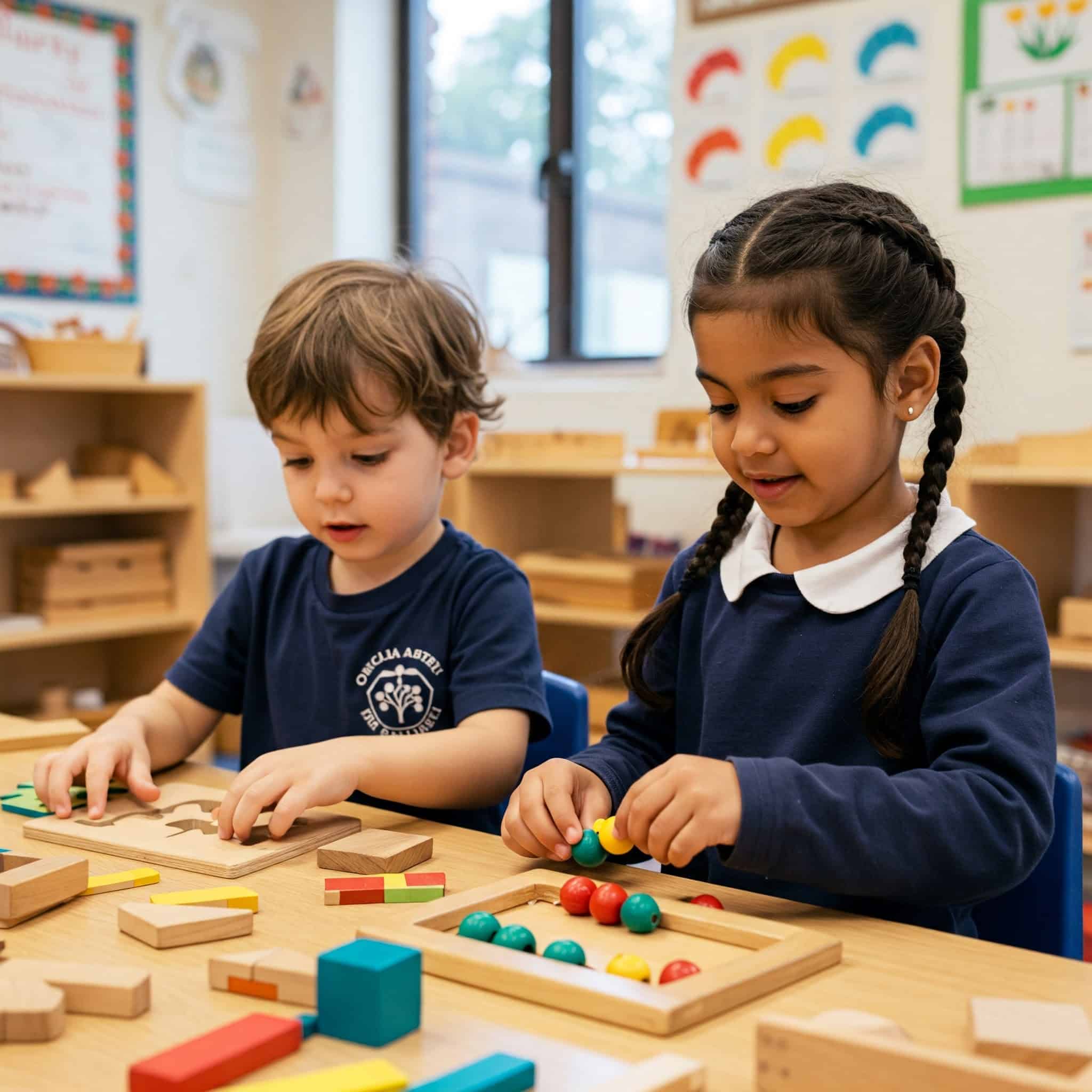
The Montessori classroom is a thoughtfully prepared space designed to foster independence, focus, and a lifelong love of learning. Every material—from colorful bead chains to sandpaper letters- serves a clear purpose: to engage the senses and spark curiosity.

When children arrive, they are warmly welcomed by Montessori-trained guides who have carefully arranged the shelves with a variety of hands-on learning materials. Each activity invites exploration, allowing children to move freely and learn at their own pace. This freedom within structure builds confidence and a sense of ownership over their education.

The Morning Work Cycle

The morning begins with the work cycle, a core element of the Montessori method. During this time, children choose their own activities from the prepared environment and focus deeply, uninterrupted, on their chosen work.

Some children may practice pouring, spooning, or buttoning in the Practical Life area, developing fine motor skills and independence. Others explore shapes, textures, and colors in the Sensorial area, refining their ability to observe and compare.

In the Language area, children trace sandpaper letters with their fingers, preparing their minds and hands for reading and writing. Nearby, the Math corner hums with activity as students count golden beads, arrange number rods, and explore foundational math concepts through tangible experiences.

This self-directed learning helps each child progress naturally from concrete experiences to abstract understanding, building both academic mastery and self-discipline.

The Montessori Guide

The Montessori guide, or teacher, plays a quiet yet powerful role. Moving gracefully around the room, the guide observes each child’s interests and readiness, stepping in only when needed to introduce new lessons or materials.

Instead of direct instruction, the guide empowers children to learn independently, offering individualized guidance that aligns with their natural development. This respect for the child’s pace and curiosity nurtures intrinsic motivation, a love of learning that lasts far beyond preschool.

The Outdoor Environment

After a fulfilling morning of focused work, children head outdoors to explore, play, and connect with nature. The Montessori outdoor environment is an extension of the classroom, designed to promote physical development, creativity, and social interaction.

Children might tend to the school garden, observe insects and plants, or engage in cooperative games with friends. These experiences foster problem-solving, teamwork, and respect for the natural world—core values of the Montessori philosophy.

The Afternoon Work Cycle

Reenergized from outdoor play and lunch, children return to the classroom for the afternoon work cycle. This session allows for deeper concentration and small-group lessons tailored to individual needs.

Some children revisit morning lessons, while others are introduced to new materials that build upon their interests. The Montessori guide continues to support each learner’s growth, ensuring that academic, social, and emotional development remain balanced throughout the day.

The Closing Circle

As the day comes to an end, the children gather for the closing circle, a time to reflect, share, and celebrate the day’s achievements. They may sing songs, share their work, or engage in short discussions that build confidence and communication skills.

The closing circle is more than a routine; it’s a meaningful moment that strengthens the sense of community, empathy, and gratitude within the classroom.

The Journey Continues

When the school day ends, the children leave with smiles, carrying the confidence and curiosity they’ve cultivated throughout their Montessori day. Each experience, whether it’s pouring water, tracing letters, or caring for plants, becomes a stepping stone toward independence and lifelong learning.

At Montessori School of Sugar Land, every day is an opportunity to nurture bright, capable, and compassionate learners who are eager to explore the world around them.

Experience Montessori Education for Yourself

If you’d like to see what a true Montessori classroom looks like in action, we invite you to visit us.
👉 Schedule a Tour Today at Montessori School of Sugar Land, where your child’s love for learning takes root.
📍 Two Campuses: Sugar Land & Sienna
🌐 www.montessorisugarland.com

Share

New posts

Why Montessori School of Sugar Land (MSSL) Is the Right Choice from 6 Weeks to 6 Years: A Year-Round Montessori Journey

March 10, 2026
summer camp

MSSL Summer Camp: A World of Fun Under One Sun

March 10, 2026

Montessori School vs Traditional Daycare

October 30, 2025
logo new @2x

Contact Montessori School of Sugar Land to Schedule a Tour

Sugar Land Campus
4500 Austin Pkwy
Sugar Land, TX, 77479
281-277-2702 mssl@montessorisugarland.com Mon - Fri (7:00am - 6:00pm)
Sienna Campus
8900 Sienna Ranch Rd
Missouri City, TX, 77459
281-778-9780 sienna@montessorisugarland.com Mon - Fri (7:00am - 6:00pm)

About Us

Why MSSL Curriculum Mission Locations FAQs
Blog About Us Programs Admissions Contact

© Copyright 2024. All rights reserved  montessorisugarland.com

Privacy Policy
Home
Tour
Tuition
More
  • Home
  • About Us
    • Why Choose MSSL
    • Curriculum
    • Mission & Philosophy
    • Enrichment Classes
      • French
      • Spanish
      • Zumba
      • Soccer
      • Music
      • Science
      • Book Club
    • Healthy Meals
    • FAQs
  • Programs
    • Infants
    • Toddlers
    • Transition
    • Primary
    • Private Kindergarten
    • AfterSchool
    • Summer Camp
  • Resources
    • Our Blog
    • Calendar
    • Newsletter
    • Menu
    • Ways to give
    • Photos
  • Campuses
    • Sugar Land Campus
    • Sienna Campus
  • Tuition
  • Admissions
    • Tour For Discount
  • Contact
  • Book A Tour

montessori preschool, montessori schools near me, montessori daycare near me, best montessori schools near me, private montessori schools near me, elementary montessori schools near me, top montessori schools near me, montessori pre k near me, montessori nurseries near me, montessori pre k, good montessori schools near me, montessori school, montessori, classroom early childhood, maria montessori, montessori schools, montessori classroom layout, early childhood, early childhood classroom

Related Pages:
  • Montessori Education FAQs
  • Montessori Preschool Education Overview

montessori preschool classroom, montessori preschool, preschool montessori classroom, montessori classroom preschool, preschool montessori, montessori for preschool

Understanding Montessori Education

Montessori education is a child-centered approach that emphasizes independence, hands-on learning, and respect for a child’s natural psychological, physical, and social development. This educational philosophy fosters an environment where children can thrive, learn at their own pace, and explore their interests, leading to a lifelong love of learning.

Developed by Dr. Maria Montessori over a century ago, this method encourages children to engage with their surroundings in a meaningful way. Through carefully designed materials and activities, children develop critical thinking skills and autonomy, preparing them for future academic and life challenges.

Benefits of Montessori Education

The benefits of Montessori education extend beyond academics; they include social, emotional, and physical development. Children in Montessori classrooms learn to collaborate, communicate, and resolve conflicts, which enhances their social skills and emotional intelligence.

Research shows that Montessori students often perform better in standardized tests and exhibit greater creativity and problem-solving abilities compared to their peers in traditional educational settings. This holistic approach nurtures well-rounded individuals who are prepared to face the complexities of the world.

Parent Involvement in Montessori Education

Parent involvement is crucial in the Montessori educational experience, fostering a strong partnership between the school and home. Parents are encouraged to engage in their child’s learning process, whether through volunteering, attending workshops, or participating in school events.

By being involved, parents gain insights into Montessori principles and practices, which they can reinforce at home. This collaboration not only supports the child’s development but also strengthens the community within the school, creating a supportive network for families.

Transitioning to Traditional Education

Many parents wonder how children transition from Montessori education to traditional schooling. Montessori students often adapt well due to their developed independence, self-motivation, and critical thinking skills, which are essential in any educational setting.

Schools that understand the Montessori philosophy recognize the strengths of these students and provide the necessary support during the transition. With the right guidance, children can thrive in traditional environments while retaining the benefits of their Montessori upbringing.